
Walter's Machine-Software Package Cuts Orthopaedic Part Production Times And Costs
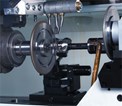
The combination of the Walter Helitronic Vision CNC tool grinder and Walter's just-announced NXis Ortho software represents a package solution specifically designed to allow orthopaedic parts manufacturers to take prototypes seamlessly from 3-D model to high-quality finished product in faster than ever programming, set-up and machining times.
Available from Körber Schleifring UK of Honiley near Kenilworth, the NXis Ortho package handles parts from design through 3-D simulation of the machining program, ‘testing' the complete machining process on the ultra-fast (up to 50 m/min) Helitronic Vision – including the operation of the grinding wheels and tools, as well as dressing routines.
This enables likely production problems to be identified and therefore eliminated before manufacture commences. The result, therefore, is faster ‘right first time' parts to market and lower manufacturing costs!
Driven by (all compliant Fanuc) G codes, NXis Ortho provides 3-D simulation in Siemens PLM NX (formerly Unigraphics) and, in addition to collision detection, the software verifies machining paths – indeed, users can actually see the ‘metal being removed' – when grinding at any wheel position (three, six or nine o'clock).
The Walter five-axis Helitronic Vision is capable of processing rotary HSS and carbide tools from 3 mm to 320 mm diameter and up to 370 mm long for length/contour grinding and 300 mm long for length/face grinding at speeds that are up to 30 per cent more productive that comparable machines. The resulting workpieces are produced in short cycle times and to surface finishes of 0.1 Ra.
Also, Helitronic Vision users can automatically switch between up to 12 wheel sets/cutting tools in under 10 seconds, enabling the single set-up production of complex or multiple parts.
Other machine features that contribute to the Helitronic Vision's impressive CV include:
- Linear and direct rotary drive technology – the A and C rotary axes use gearless direct drive motors; X, Y and Z axes have linear motors;
- Fast acceleration to minimise non-grinding times;
- The absence of drive linkage means motors position accurately via glass scale feedback;
- Superior coolant delivery for minimal part distortion and maximum speed; and
- In-process wheel dressing.
SOURCE: Walter